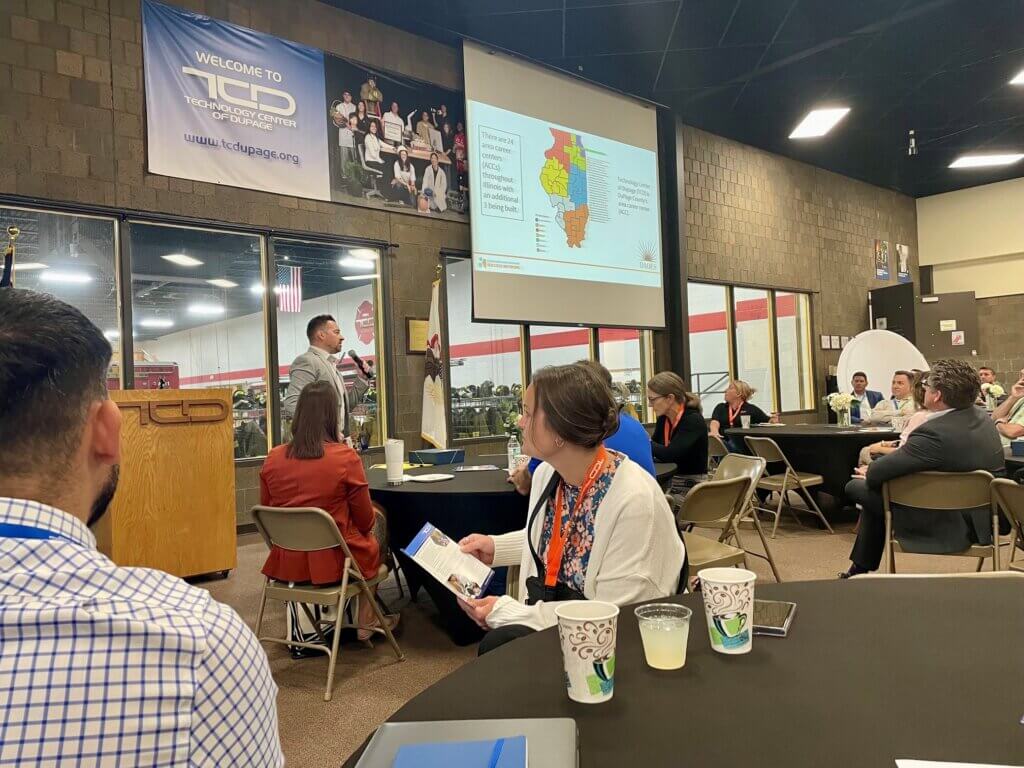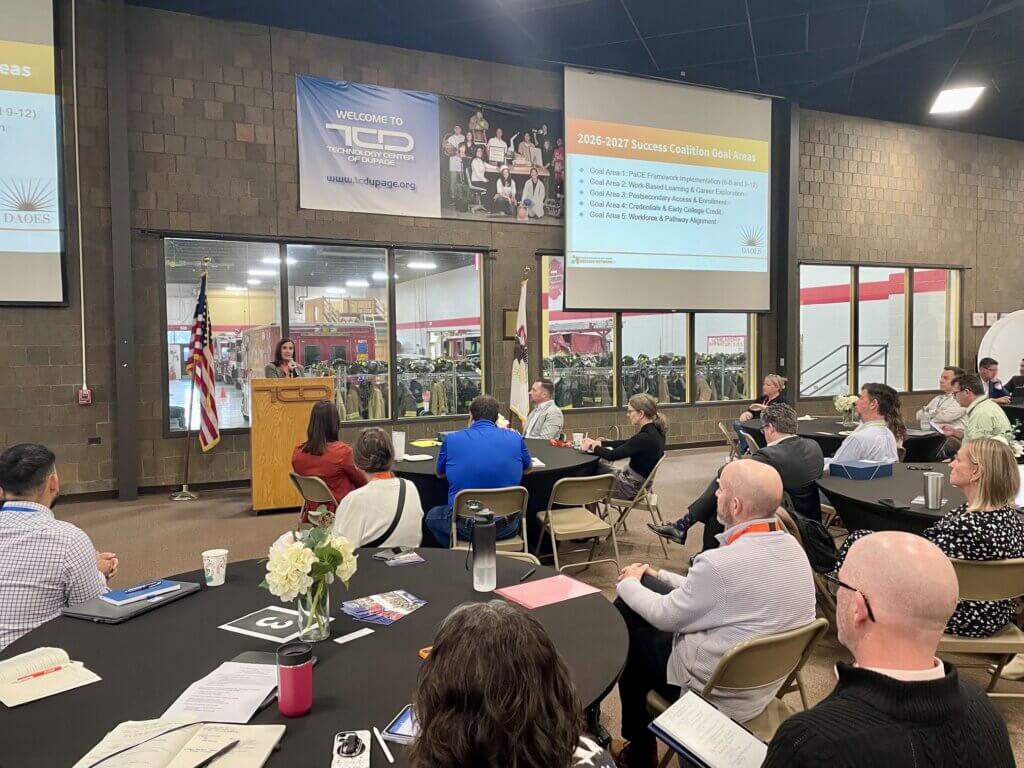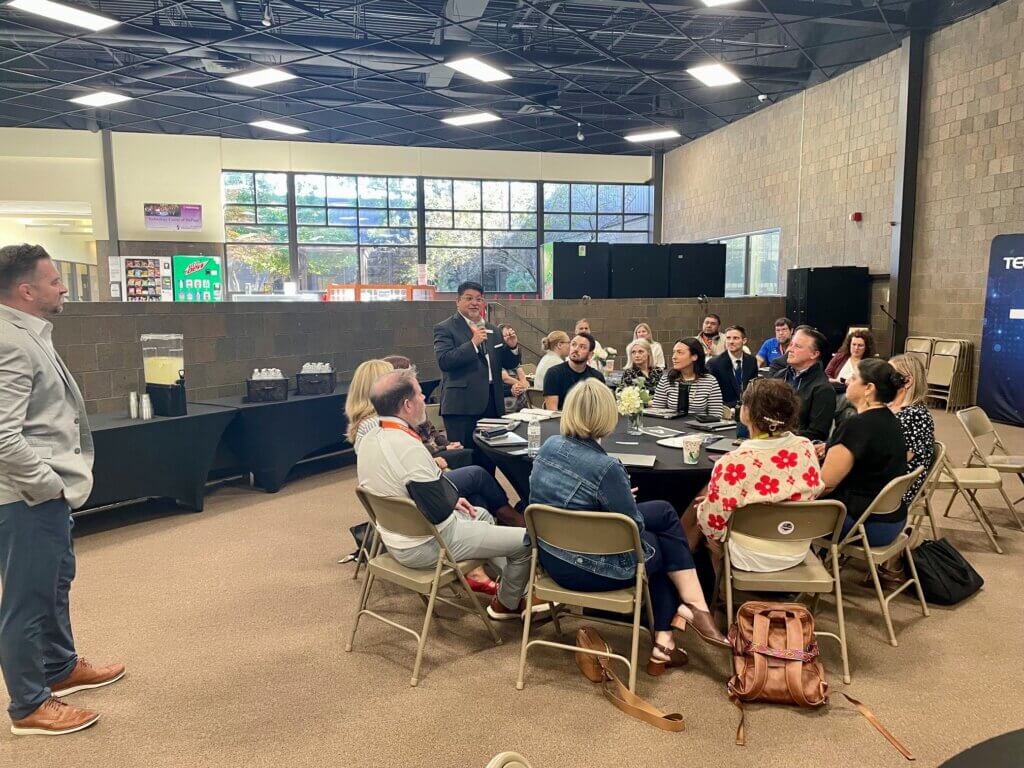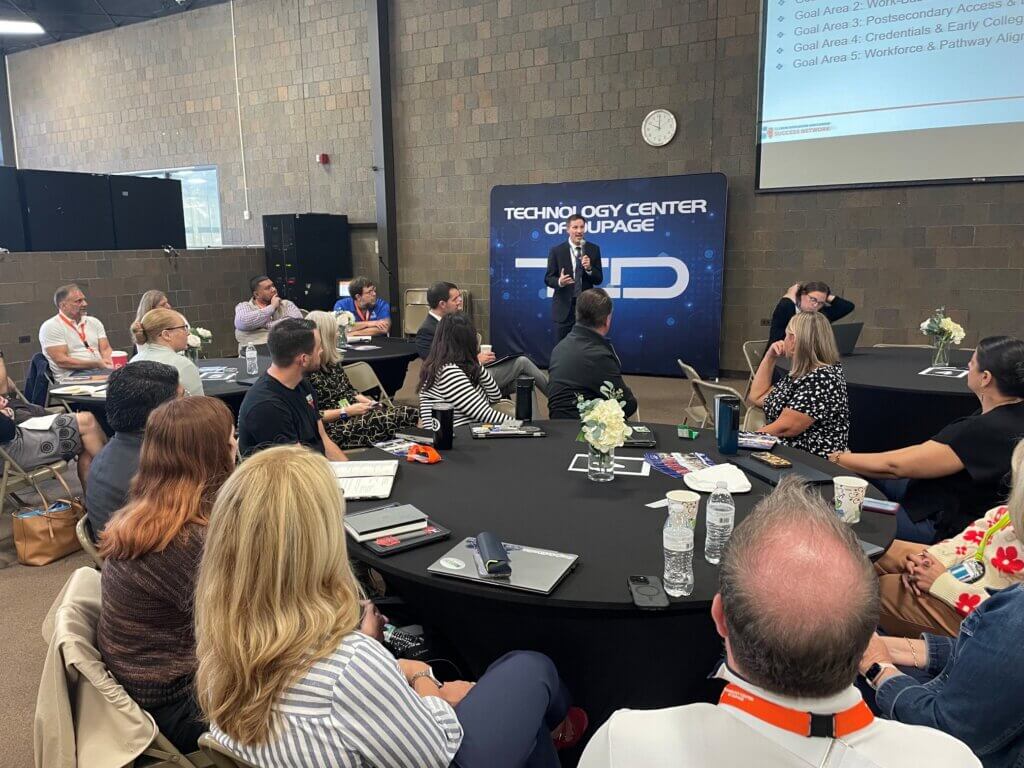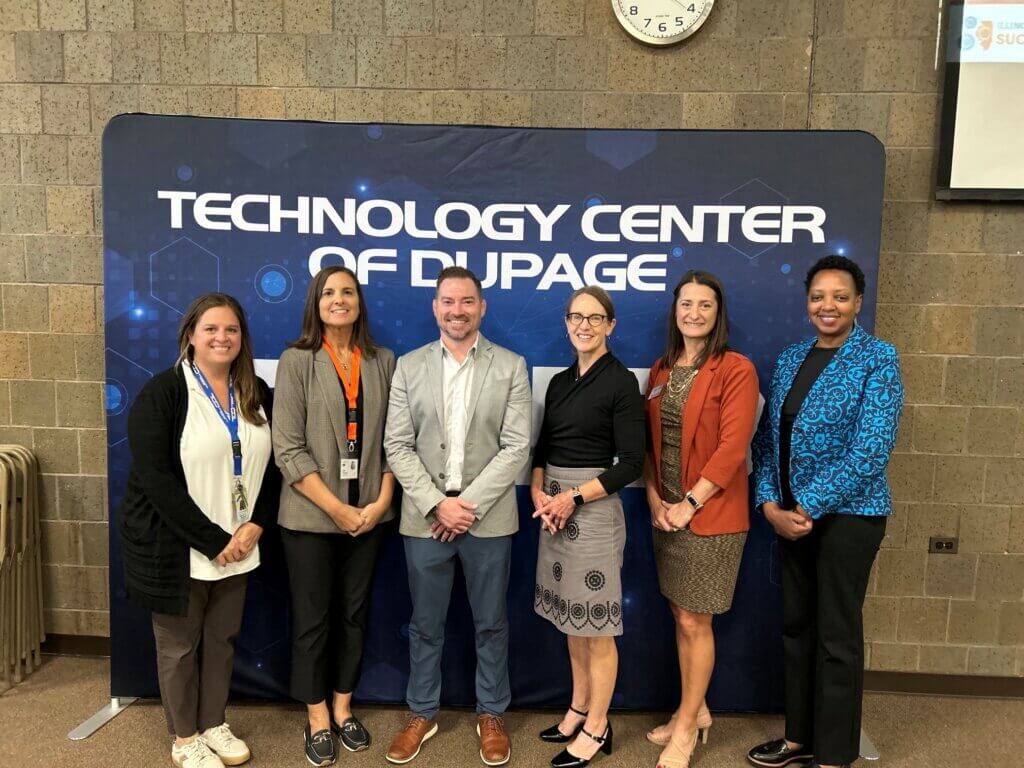
On September 29, 2026, the DuPage Coalition for Postsecondary Success Leadership Community’s intermediary, the DuPage Area Occupational Education System (DAOES / EFE 90), brought together more than 60 leaders from diverse sectors to review their shared goals and discuss how to continue putting them into action in service of young people. Topics included implementing the PaCE Framework, work-based learning and career exploration, postsecondary access and enrollment, credentials and early college credit, and aligning pathways with workforce needs.
The Coalition aims to create a regional education-to-workforce ecosystem, moving beyond individual organizational initiatives to better align K-12, postsecondary, workforce, and employer resources around shared student outcomes.
A major focus will be developing a common regional understanding of postsecondary success that recognizes multiple pathways after high school, including college, credentials, apprenticeships, work-based learning, and direct pathways into high-demand careers.
Initial work will focus on establishing baseline regional data and common measures of success, particularly around PaCE implementation, work-based learning and career exploration, FAFSA completion and postsecondary enrollment, dual credit and industry credentials, and alignment between educational programming and regional workforce needs.
The Coalition will initially prioritize several high-demand regional sectors, including aviation; business, finance and entrepreneurship; health sciences and technology; information technology and cybersecurity; and manufacturing, engineering, technology and skilled trades.
A key part of the work will be connecting and leveraging resources that already exist across DuPage County rather than creating duplicative programs, particularly where partnerships can expand access to postsecondary opportunities, work-based learning, credentials, dual credit, apprenticeships, and other ways to reduce the cost of education and training.
Ultimately, the Coalition is intended to give DuPage County a shared regional infrastructure for postsecondary and workforce readiness, so opportunities available to students depend less on the individual district they attend and more on the collective resources available throughout the region.