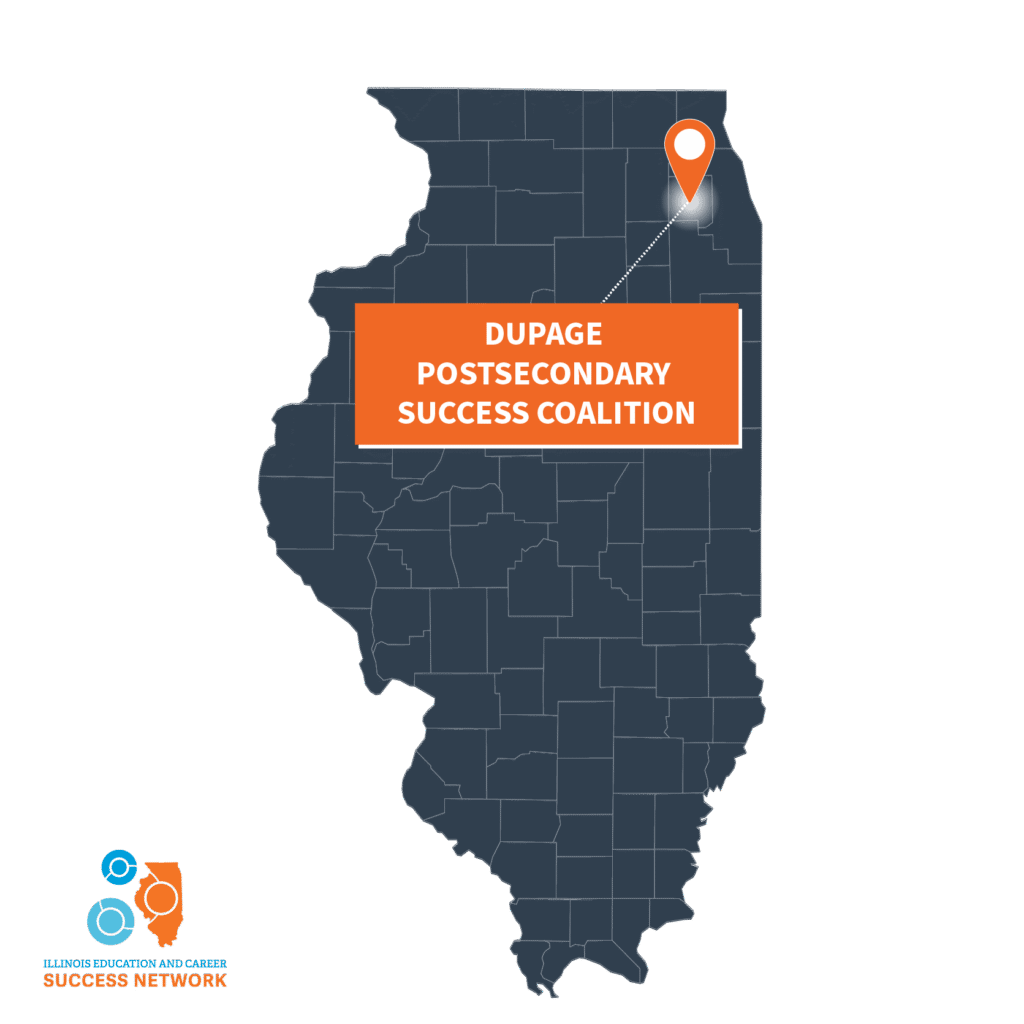
DuPage Postsecondary Success Coalition

Leadership Community

The DuPage Postsecondary Success Coalition serves all of DuPage County and brings together leaders from K–12 school districts, the College of DuPage, DuPage County Workforce Development, business and industry partners, career and technical education, and community organizations.

Led By

DuPage Area Occupational Education System (EFE 90)

Areas of Expertise

  • K-12 Education – Develops students’ knowledge, skills, and aspirations through high-quality instruction, career exploration, and Career & Technical Education that prepares students for multiple postsecondary pathways.
  • Postsecondary Education – Creates seamless transitions beyond high school by aligning programs of study, expanding dual credit and credential opportunities, and supporting students toward certificates, industry credentials, and degrees.
  • Business & Industry – Provides real-time workforce intelligence, validates high-demand skills, offers authentic work-based learning experiences, and creates pathways to meaningful employment.
  • Workforce Development & Community Partners – Connects education and industry through labor market data, workforce initiatives, support services, and regional strategies that remove barriers and expand opportunity.
  • Regional Leadership (The Coalition) – Aligns these sectors around a shared vision, convenes partners, identifies regional priorities, measures progress, and ensures every student has equitable access to high-quality postsecondary opportunities.

Prioritized Focus Areas

  • Aviation
  • Business, Finance, and Entrepreneurship
  • Health Sciences and Technology
  • Information Technology and Cybersecurity
  • Manufacturing, Engineering, Technology, and Skilled Trades

Key Successes

Coming soon…

2-Year Goals

In 2026-2027, the focus will be on establishing baseline data and common metrics. In 2027-2028, the focus will be on measuring progress and refining regional strategies.

  • Increased completion of the Illinois PaCE Framework benchmarks across participating school districts.
  • Growth in student participation in work-based learning experiences, internships, apprenticeships, and career exploration.
  • Increases in FAFSA completion and postsecondary enrollment across all pathways.
  • Growth in students earning industry credentials, dual credit, and early college credit.
  • Improved alignment between regional workforce needs and educational programming as measured through employer engagement and pathway expansion.

Leadership Community Updates